How to Measure Your Door for a Keyless Lock
To learn how to measure door backset, measure from the door edge to the center of the deadbolt hole. Also measure the cross bore and door thickness, then match all 3 to the lock's fit requirements.
On this page (8 sections)
- Which door measurements matter before buying a keyless lock?
- How to measure door backset accurately
- How to measure the cross bore and edge bore
- How to measure door thickness and check the fit
- What setup steps prevent a poor fit?
- What measurement mistakes should you avoid?
- Which lock should you choose after measuring?
- What should you record before ordering a keyless lock?
To learn how to measure door backset, measure from the door edge to the center of the deadbolt hole. Before choosing a keyless lock, also check the cross-bore diameter, the smaller edge bore, and door thickness, then compare each measurement with the lock's fit requirements.
A tape measure or ruler, a straightedge, and a note of your measurements are enough for most doors. Measure the door itself, not the trim or frame, and record inches so you can compare models consistently.
Which door measurements matter before buying a keyless lock?
The main measurements are backset, cross-bore diameter, and door thickness. The latch hole at the door edge and the lock's installation layout also need to match.
A deadbolt passes through a large round hole in the door face. Its latch sits in a smaller opening in the door edge.
Backset tells you how far the large hole's center is from that edge, which affects whether the latch lines up with the strike plate in the frame.
If you're deciding which kind of lock to buy, our guide to keyless door lock types and features can help you choose between keypad and smart options before measuring for a specific model. Keep your notes with you as you compare fit instructions, because a lock can support your backset and still be wrong for the door thickness or hole size.
How to measure door backset accurately
Measure from the door edge to the center of the deadbolt cross bore. Common backsets are 2 3/8 in and 2 3/4 in, but use the measurement from your own door rather than assuming it follows a standard.
Open the door and locate the large round hole on its face. Place the end of your ruler at the door edge and measure straight to the center of that hole.
If the hole is obscured by hardware, use the center of the deadbolt cylinder or interior thumbturn as a reference.
Write down the result exactly, including the fraction. A reading of 2 3/8 in is different from 2 3/4 in, and rounding to “about 2 inches” can lead you to buy a latch that won't align.
If a deadbolt is already installed, the center of the cylinder or thumbturn usually gives you a practical reference point. Check that the replacement lock supports the measured backset before removing the old hardware.
What should you check when measuring a door backset?
Check whether the lock supports your measured backset directly or has an adjustable latch with a position that matches it. Follow the model's instructions to confirm which settings are available.
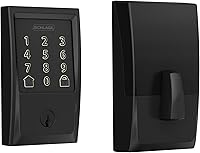
For example, Schlage says the BE365 fits 2 3/8 in or 2 3/4 in backsets. It suits buyers whose door measures one of those distances and who want a keypad deadbolt; skip it if another required dimension falls outside its fit range.
Don't assume the new lock will adjust just because the old one did. Some latches fit only one position, and forcing the latch or strike to compensate for a mismatch can leave the deadbolt misaligned.
How to measure the cross bore and edge bore
Measure the large face hole across its center, from one inner edge to the other. That diameter is the cross-bore size, and it needs to fit the lock body.
Keep the ruler level across the opening. Measure the hole itself, not the outer edge of a decorative plate or the outside of an installed lock.
If a plate hides the opening, consult the lock's installation instructions before taking anything apart.
The edge bore is the smaller opening through the door edge where the latch sits. Measure its diameter across the opening, or compare it with the lock's instructions if the latch is still in place.
Also check the latch face and its position against the lock's required layout.
A quick sketch can help when the door has extra holes from older hardware. Note where each opening sits relative to the edge and to the floor, then compare those locations with the new lock's instructions before removing hardware or drilling.
If you're unsure how the lock body and latch fit together, read how an electronic door lock works. That guide can help you understand which parts need to line up during installation.
How to measure door thickness and check the fit
Measure the door slab across its edge, from one face to the other. Leave out trim, weather stripping, and any separate storm door.
Hold the tape straight across the slab. Compare the result with the lock's supported door-thickness range.
Check every other fit requirement before ordering. The Schlage BE365 fits doors from 1 3/8 in to 1 3/4 in thick, so it may suit a door in that range if the holes and backset also match.
The Kwikset Powerbolt 250 is a keypad deadbolt with auto-lock, Vacation Mode, and up to 25 user codes. It may suit someone who wants those code and locking options, but skip it if its installation instructions don't match your door's measurements.
Yale Approach follows a different fit path: it installs on the inside of an existing deadbolt without replacing it, so you keep the keys that already work with that deadbolt. Consider it when you want app-based access and activity tracking while retaining the existing lock; skip it if your door has no compatible deadbolt to attach to.
Don't infer compatibility from the lock's appearance or brand. Check the model's installation instructions for the required dimensions, door preparation, and clearance.
What setup steps prevent a poor fit?
Match the measurements before you start installation. Keep the new lock's instructions beside your notes and confirm the backset, hole sizes, thickness, and installation type in one pass.
Before taking out the current hardware, check that the door opens and closes smoothly. A door that sticks or a deadbolt that binds may have an alignment problem separate from the lock's measurements.
Fixing that first can make it easier to tell whether the new hardware fits.
When installing, keep the latch and strike aligned with the door's existing movement. Follow the order and orientation shown in the lock instructions.
Avoid tightening parts so much that they shift out of position. Test the door with it open before closing it, so you can confirm the bolt moves freely and the keypad or thumbturn operates as intended.
For a retrofit lock, confirm the existing deadbolt works smoothly with its key before attaching the interior unit. Since Yale Approach leaves the existing deadbolt in place, a sticking or incompatible deadbolt can undermine the fit even if the new unit attaches.
What measurement mistakes should you avoid?
Measure the center of the deadbolt hole, not its near edge. That is the most common source of a backset number that's too short.
Other easy mistakes include measuring from the trim instead of the door edge, measuring across a decorative plate, and including a storm door when checking slab thickness. Fractions matter, so write down the full reading rather than rounding.
Don't treat a backset match as proof that the lock fits. The cross bore, edge bore, thickness, hole layout, and installation type all matter.
If you can't measure a covered opening accurately, use the manufacturer's instructions or ask a qualified installer before buying.
If the measurements don't match, choose a lock that supports them or get advice about whether the door can be prepared for another model. Never force a latch into an opening that is too small or assume drilling is allowed without checking the door and lock instructions.
Which lock should you choose after measuring?
Choose based on both fit and how you want to enter the door. A keypad deadbolt needs matching door dimensions, while a retrofit smart lock also needs a compatible existing deadbolt.
Choose the Schlage BE365 if your door has a 2 3/8 in or 2 3/4 in backset, measures 1 3/8 in to 1 3/4 in thick, and you want keypad access with a physical key backup. Skip it if any other required opening or dimension doesn't match.
Choose the Kwikset Powerbolt 250 if its installation requirements fit your door and you want auto-lock, Vacation Mode, or multiple user codes. Skip it if you can't confirm that its latch and hole layout match the existing door.
Choose Yale Approach if you want to keep a compatible existing deadbolt and add app control, remote access, and activity tracking through Yale Access. Skip it if you need a replacement deadbolt or your existing hardware isn't compatible.
For a broader comparison of entry methods and features, see how to choose a keyless door lock. If security is your main concern, our guide to whether keyless door locks are safe covers the trade-offs to consider.
What should you record before ordering a keyless lock?
Record backset, cross-bore diameter, edge-bore diameter, and door thickness. Add a note on whether you want to replace the deadbolt or keep it and attach a retrofit unit.
To finish how to measure door backset, measure to the center of the large hole, then match that result and the other door dimensions to the chosen lock's instructions. If all measurements fit, choose the entry style and features that suit your household; if any dimension is unclear or outside the supported range, pause and confirm the fit before buying.
Frequently asked questions
How do I measure a door backset?
Measure from the edge of the door to the center of the large deadbolt hole. That distance is the backset.
Common sizes are 2 3/8 in and 2 3/4 in, but confirm which sizes the lock accepts before you buy.
What is the cross bore on a door?
The cross bore is the large round hole through the face of the door for the lock body. Measure its diameter straight across the opening.
Also check the smaller hole in the door edge, called the edge bore, against the lock's fit instructions.
How thick does a door need to be for a keyless lock?
Door thickness requirements vary by lock, so measure the door slab at its edge and compare that number with the lock's stated range. Don't include trim, weather stripping, or a storm door in the measurement.
Can I install a keyless lock if my door has no deadbolt hole?
Some keyless locks replace an existing deadbolt, while retrofit models attach to the inside of a compatible deadbolt. If your door has no deadbolt bore, check the lock's installation instructions and whether new holes are required before buying.