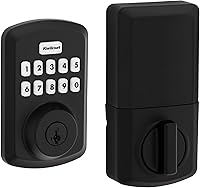
How to Remove a Kwikset Deadbolt Lock
To remove a Kwikset deadbolt lock, take off the interior thumb turn first, then the exterior cylinder, and pull the latch from the door edge. The two halves are held together by screws through the inside plate, so the interior side comes off before the outside.
On this page (9 sections)
- What tools do you need to remove a Kwikset deadbolt lock?
- How do you take off the interior thumb turn?
- How do you remove the exterior cylinder?
- How do you pull the latch and bolt out of the door?
- How do you free a deadbolt that's stuck in the door?
- What should you check before installing a replacement?
- How do you remove the strike plate from the frame?
- When should you call a locksmith instead of removing it yourself?
- How to finish removing a Kwikset deadbolt lock and prep the door
To remove a Kwikset deadbolt lock, start on the inside of the door. The interior plate covers the screws that hold the lock together, so it comes off first.
Then you can separate the exterior cylinder, pull the latch, and slide the bolt free from the door edge.
This is a job you can do with one Phillips screwdriver and about 15 minutes. The trick is knowing the order, because the outside cylinder won't come off while the inside plate still holds the mounting screws.
What tools do you need to remove a Kwikset deadbolt lock?
A Phillips #2 screwdriver covers most Kwikset deadbolts, plus a utility knife and a small container for the screws. Kwikset uses Phillips-head mounting screws on its standard deadbolts, so no special driver is required.
Keep these within reach before you start:
- Phillips #2 screwdriver, or a cordless driver on the lowest clutch setting
- Utility knife to score paint around the plates
- Painter's tape or a small bowl for the screws
- A plastic scraper or putty knife to ease a stuck plate
- A flashlight to see inside the door cavity
Some newer Kwikset models use Torx screws on the interior plate. Check the screw heads before you begin so you make one trip to the toolbox.
A screwdriver that fits snugly matters more than the brand.
Skip the power tool if the screws feel soft. A cordless driver can chew up a small screw head fast, and hand pressure gives you more feel for when a screw starts to bind.
How do you take off the interior thumb turn?
Remove the two mounting screws under the interior plate, then lift the thumb turn and plate off the door. On most Kwikset deadbolts, the interior trim sits over the screws or hides them behind a small cover.
The steps:
- Score any paint around the edge of the interior plate with the utility knife.
- Find the two screws, either exposed or under a snap-on cover.
- Hold the exterior side of the lock steady while you loosen both screws evenly.
- Pull the interior plate straight off and set the screws aside.
- Let the thumb turn hang or remove it from the spindle.
The exterior cylinder stays in the door for now. It's still keyed and still seated, but with the interior screws out it's only held by the bolt and the door cutout.
Don't let go of the outside half while the screws are loose. On some doors it will drop against the frame, and the cylinder can scratch the paint or bend the tailpiece.
What if the interior plate won't budge?
Score the paint seam and tap the plate gently with a plastic scraper. Paint and caulk often bridge the trim to the door, and the bond holds tighter than the screws.
Work around the full edge rather than prying in one spot. A thin putty knife slid under the plate spreads the force.
If the plate still sticks, check for a hidden screw under a decorative cap before applying more pressure.
How do you remove the exterior cylinder?
Hold the outside cylinder and pull it straight out once the interior side is free. The cylinder passes through the door and connects to the thumb turn by a flat tailpiece, so it slides out toward you.
Support it with one hand as the last screw comes out. Kwikset cylinders on standard deadbolts are a single unit: the keyway, housing and tailpiece come away together.
If the cylinder catches on the door, don't twist or lever it. A slight wiggle while pulling is enough.
The tailpiece can snag on the bolt if it's turned off-center, so rotate the key slightly until it clears.
Set the cylinder on a cloth so the keyway doesn't pick up grit. Keep the key with it if the lock is keyed alike to other doors in the house.
Our guide to the Kwikset smart lock lineup explains keyed-alike options if you plan to replace rather than reinstall.
How do you pull the latch and bolt out of the door?
Take out the two latch screws on the door edge, then slide the latch out. The bolt is part of the same assembly on a deadbolt, so the latch and bolt come free as one piece.
Look at the edge of the door, in line with the deadbolt. Two screws hold the faceplate against the door edge.
Remove both, then pull the faceplate and latch toward you.
On Kwikset deadbolts the faceplate is often a snap-on cover over the latch body. Pry it up gently with a flat tool, then remove the screws underneath.
Some models use a wrap plate that covers the faceplate and the edge of the door; loosen that plate first.
The bolt may resist if it's extended. Turn the thumb turn or key to retract the bolt, then pull.
A bolt that's jammed against the strike plate needs the door open so it can clear the frame.
Catch the latch as it comes out; the bolt is heavier than it looks. Set it down with the faceplate so the screws stay together.
How do you free a deadbolt that's stuck in the door?
Retract the bolt first, then check for paint bridging the faceplate. A deadbolt stuck in the door is almost always held by paint, caulk or a bolt that's still extended into the strike.
Try these in order:
- Turn the key or thumb turn to pull the bolt back into the door.
- Score around the faceplate and the exterior trim with the utility knife.
- Tap the exterior cylinder lightly with a rubber mallet to break the paint seal.
- Wiggle the latch while pulling, rather than forcing it.
- Check the door edge for a second screw hidden under the wrap plate.
If the cylinder turns but the bolt won't retract, the tailpiece may be misaligned or the internal mechanism may have failed. In that case, pull the cylinder first, then reach into the door cavity to push the bolt back by hand.
Don't hit the cylinder with a metal hammer. The keyway is soft metal and a dent there can trap the key.
A rubber mallet or the heel of your hand is enough to loosen paint.
What should you check before installing a replacement?
Measure the door thickness, the backset and the bore hole before you buy anything. A replacement deadbolt has to match the holes already in the door, or you'll be drilling and patching.
Three numbers matter:
- Door thickness: Kwikset deadbolts fit doors about 1 3/8 to 1 3/4 inches thick. A thicker door needs a different bolt.
- Backset: the distance from the door edge to the center of the bore hole. It's usually 2 3/8 or 2 3/4 inches.
- Bore hole size: standard deadbolts use a 2 1/8-inch hole in the face of the door and a 1-inch edge hole.
Take the old latch with you when you shop. The faceplate shape and screw spacing tell you whether a new latch will drop into the existing cutout.
If you're switching to a keypad or smart deadbolt, check the model's door-thickness range first. Our explainer on what a retrofit smart lock is covers options that keep the existing cylinder.
For models that replace the whole lock, the best retrofit smart lock picks show what fits a standard deadbolt cutout.
How do you remove the strike plate from the frame?
Unscrew the strike plate on the door frame if you're replacing the whole set. The strike is the metal plate the bolt slides into, and it's held by two screws on the jamb.
You don't need to remove it to take out the deadbolt. It only comes off when the new lock's bolt needs a different strike, or when the old strike is worn or loose.
Score around the plate, remove the two screws, and pull it free. Watch for a longer screw that reaches into the wall stud; that's normal on an exterior door and it's there for strength.
Keep the strike with the old lock so you can compare the bolt throw. A new deadbolt with a longer bolt may need a deeper mortise in the jamb.
When should you call a locksmith instead of removing it yourself?
Call a locksmith when the door won't close, the cylinder is seized, or a screw head is stripped beyond a driver. Those three cases turn a 15-minute swap into a repair job.
Signs it's time to stop:
- The bolt won't retract even with the key and the thumb turn.
- A screw head has rounded and a driver spins freely.
- The door is warped and the bolt is binding against the frame.
- The lock is a high-security model with a restricted keyway.
- The door is a fire-rated assembly with specific hardware rules.
A locksmith can extract a broken screw or ream a seized cylinder without damaging the door slab. That's often cheaper than a new door.
If the lock still works but you're replacing it anyway, the job stays a DIY one. Removing a working Kwikset deadbolt lock is the easy case: the screws turn, the cylinder slides, and the latch pulls straight out.
How to finish removing a Kwikset deadbolt lock and prep the door
Removing a Kwikset deadbolt lock comes down to order: inside plate, outside cylinder, latch and bolt, then the strike. Work from the interior side out and the parts separate without force.
Before you close up the door, fill the old screw holes with wood filler on a wood door, or plug them on a metal door. Clean the cavity so paint chips and old screws don't rattle inside.
Keep the old lock together in a bag if you might reuse the cylinder. If you're moving to an electronic lock, our guide to how an electronic door lock works explains what the new hardware needs from the same holes.
When the deadbolt is out, the door is ready for a replacement that matches your measurements.
Frequently asked questions
Do I need to remove the door to take out a deadbolt?
No. Every step happens with the door hanging on its hinges.
Removing the door only helps on a very thick or warped slab where the latch binds.
What if the screws are painted over or stripped?
Score the paint around the screw head with a utility knife so the driver seats fully. For a stripped head, press hard and turn slowly, or use a screw extractor before the head rounds completely.
Can I reuse the deadbolt after removing it?
Yes, if the latch, bolt and cylinder still move freely. Kwikset cylinders keyed alike can move to another door, but the bolt needs to match the new door's backset and thickness.
How long should a deadbolt removal take?
About 10 to 20 minutes for a standard Kwikset on a wood or metal door. Seized screws or a stuck cylinder add time, so plan for a short job with a possible delay.